Artyug
NFC-Verified Art Marketplace
Physical artwork with digital provenance — a Flutter marketplace where an NFC tag on the canvas resolves to on-chain proof of who owns it.
- ₹0
- Revenue generated
- 0+
- Artists onboarded
- 0+
- Students / users
- Android + Web
- Platform
Problem
Provenance for physical art is paperwork. A certificate of authenticity is a piece of card that can be forged, lost, or separated from the work it describes, and once a piece changes hands twice the chain of ownership is usually just somebody's word.
Why I built it
I wanted to prove I could build a consumer product that takes real money from real people, not only infrastructure other developers consume. Art was a good test because the verification problem is genuine rather than invented.
What I built
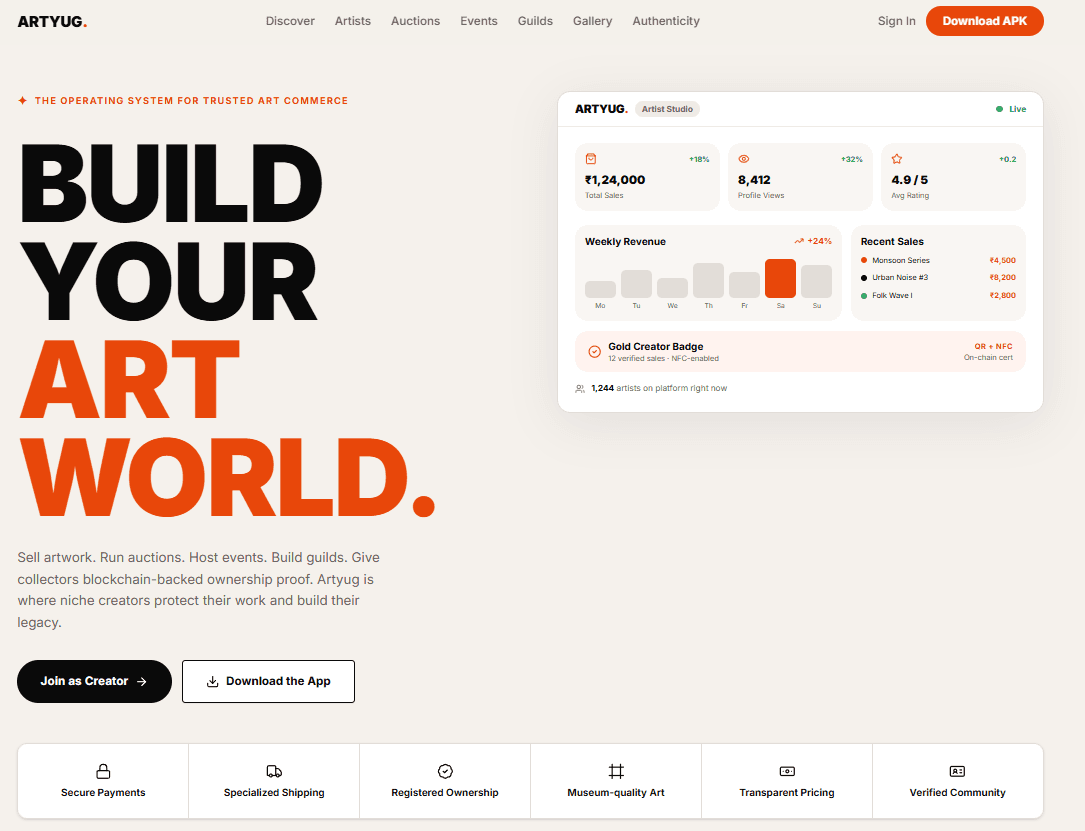
A mobile-first marketplace in Flutter with an NFC tag embedded in the physical piece. Tapping it resolves ownership against Solana, so provenance stays attached to the artwork itself rather than to a document. Artists list work, buyers pay with real money, and ownership transfers are verifiable after the sale.
What I did
- Flutter mobile application
- NFC verification flow
- Solana ownership verification
- Artist onboarding and listings
- Real-money payment integration
Screens
Technology
- Flutter
- Dart
- NFC
- Solana
- Node.js
- PostgreSQL
Challenges
NFC behaves differently across Android devices and the failure modes are all physical — tag placement, read range, what happens when the tag is damaged. None of that shows up until you are holding an actual canvas.
What I learned
Consumer products live or die on the first thirty seconds. Artists did not care about Solana at all; they cared whether listing a piece took two minutes or twenty. The verification was the point of the product and never the reason anyone used it.